A quick heads up: I write reflections about films and other media through the lens of relationships and mental health, so spoilers are part of the territory.
This post is the second of two about the film The Drama. Check out the whole series.
The film in today’s post touches on some content that may be upsetting for some folks. Take care.
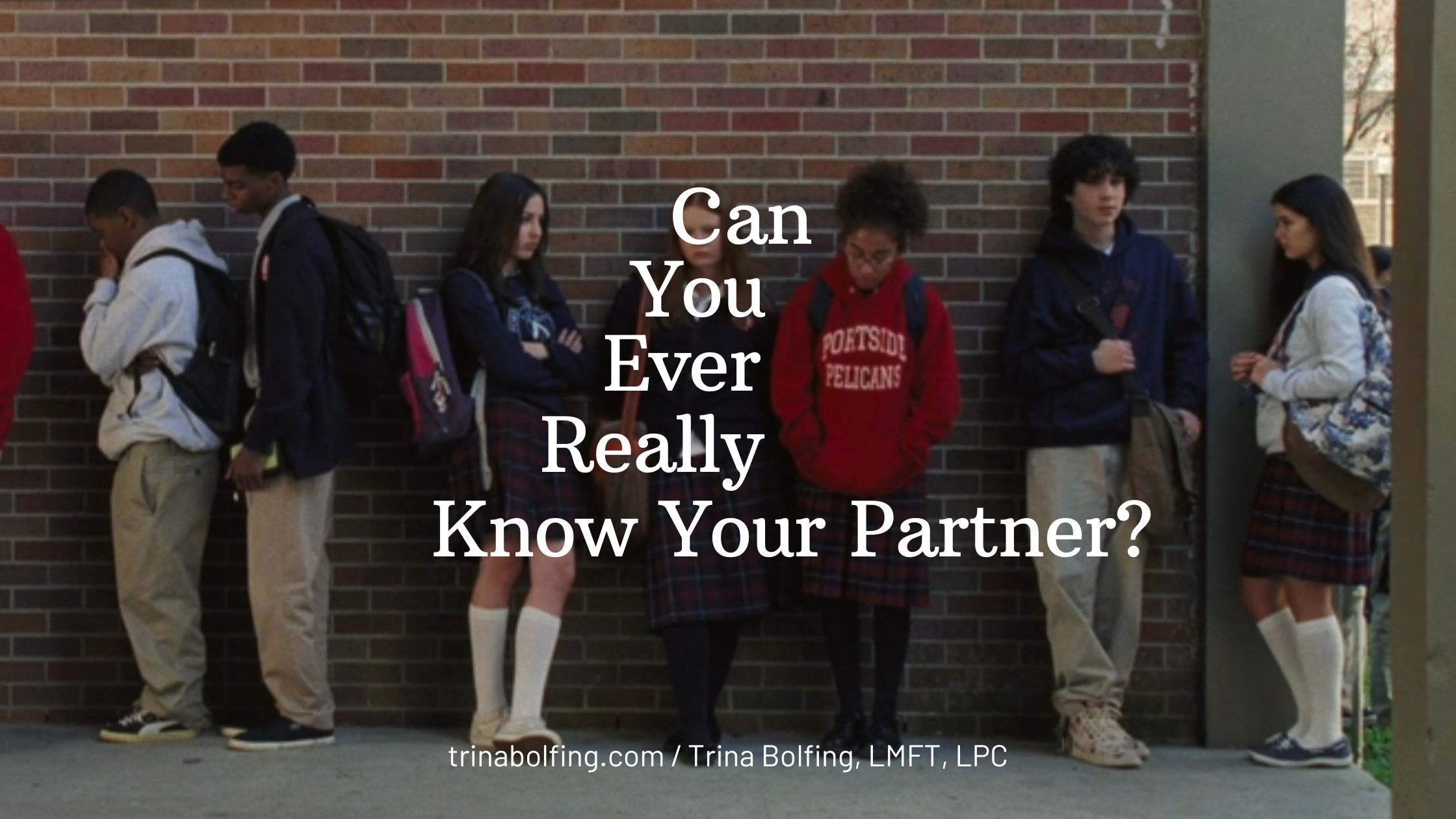
Parts work has become a big topic in the mental health corner of the internet. You’ve probably come across the idea even if it sounds unfamiliar. The idea is that none of us is just one self. We’re made up of different parts, many of them formed by what we’ve been through. Basically, all of us have a past, and we still carry that past within us. It can be a meaningful and moving task to connect with these parts of ourselves and offer healing we weren’t granted at the time.
A less commonly explored element of parts work is the relational side of it: it’s not just that I have parts – so does everyone else. I have parts, my mom and dad have parts, so do my best friend and my nieces and nephews. And for those who have a partner – so do your partners. These past versions of ourselves butt up against each other, each vying for space, for privacy, safety, even when we have no idea these parts exist. Which raises a question: can you ever really know your partner, when so much of who they are was shaped before you met?
who your partner was before you met
Today I’m returning to the film The Drama because it touches on this topic with unique poignancy. As a recap, The Drama is the story of four friends – Emma, Charlie, Mike, and Rachel – who, in a moment of lighthearted fun, decide to share the worst thing they’ve ever done with each other. One of the friends, Emma, shares that as a teen she planned a school shooting and came very close to carrying it out. The lighthearted fun ends there for the group.
The rest of the story takes place in the week leading up to Emma and Charlie’s wedding, with Charlie having to reckon with this shocking new information about his fiancée, the person he thought he knew best but now isn’t sure he knows at all. He keeps imagining himself going through the normal motions of his life, but with the young teen version of Emma instead of her adult self.
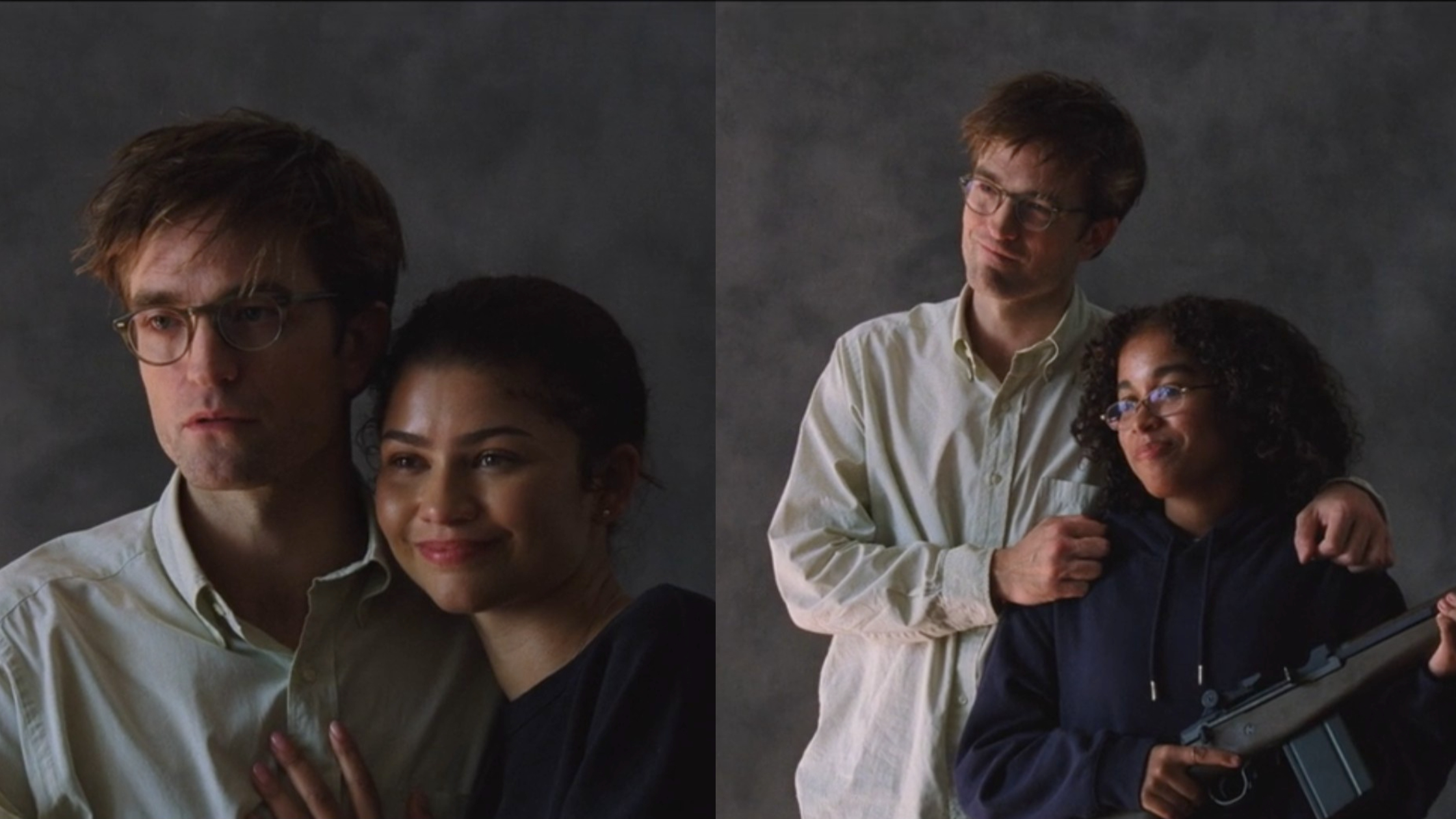
Charlile and Emma, both adults, versus Charlie with Emma’s past self, the teen who planned a school shooting.
This montage of scenes – where the adult actress playing Emma is replaced with a young teen actress – hit me hard when I watched the film. They were stark and surreal. In some ways they felt a bit on-the-nose, like it was too obvious that Charlie is in a relationship with someone with a past. But how many of us think about our loved ones’ 14-year-old selves as we’re walking down the street with them?
the 16-year-old my friends never met
It reminds me of a story from my own life that I only recently shared. When I was 16 – a very young 16, wearing a Homecoming t-shirt for my high school, no less – I went to my first live music show and was hit on by a grown-ass man who knew how old I was and didn’t appreciate me rejecting him. I’m all safe and sound, luckily I recognized him for the creeper he was and was among friends. But it’s an experience I’ve never forgotten, and it still lives within me. And until I shared it for the first time a few weeks ago, my friends who love me and have always supported me through all of my dating experiences had no idea they were walking alongside 16-year-old Trina, always just a teensy bit watchful for men like that one. My best friend had feelings about it when I shared – nothing dramatic, but to him it felt like something invisible about me had suddenly been revealed.
every version of them is in the room
My past self didn’t do anything wrong, and I don’t feel traumatized or particularly upset about the memory, yet it still remains, and it still felt eye-opening to my friend. Thinking about this story while reflecting on The Drama puts me in the headspace of the man who hit on me. Fingers crossed, he’s done some work and is a better man than he once was – I’ll be generous and assume that’s the case. If I were him, I probably wouldn’t tell that story to anyone I choose to date. But regardless of whether he keeps the story to himself, his future girlfriend is still dating a man who hit on a teenager and got upset when she didn’t reciprocate his interest. Snuggling up on the couch, her boyfriend was a creep to a teenager. Cooking dinner together, her boyfriend was a creep to a teenager. Meeting her parents, her boyfriend was a creep to a teenager.
And that’s the case for Emma and Charlie, too. Charlie is meeting with the florist, preparing for his wedding, with a teenager who planned a school shooting. Trying desperately to make a toast to his complicated new wife at their wedding reception, he will be raising a glass to a teenager who planned a school shooting. There will never be a future version of Emma who did not plan a school shooting. Through each of the versions of herself she becomes, her past will remain precisely what it is.
you can never fully know your partner
Ultimately, you can never fully know your partner. We consent to connect with people without a full picture of who they are because there's no way we could ever have one. Sometimes what's in their past is that a grown man hit on them when they were 16. Sometimes what's in their past is that they planned a school shooting.
I never intentionally avoided sharing my experience at that show – I just never thought about it. But my friends were still in a relationship with that person this whole time. Not only are these parts always there – whether we know about them or not – they are embedded in the very fabric of the people we choose to connect with. They cannot be who they are without those parts of themselves.
turning the insight toward someone else
I think what makes these scenes in The Drama unique is that we often turn insights about past selves inward. What’s more common are films like Never Been Kissed: there are a bunch of scenes in which Josie, the heroine, has moments from her own past pop into her head while she’s navigating the present-day story. I’m sure you can think of many other movies that use a similar device. What good, impressive work we can do looking inward, accepting the parts of ourselves who went through tough things – just like Josie does. But in The Drama, instead, we’re being challenged to turn that insight toward someone else. Using this lens, loving another person for precisely who they are can feel like a radical act because we’re having to accept the wholeness of the person without all of the information contributing to this whole, including a past we may never fully know.
It would be naive to say that learning new information about a person shouldn’t change how we feel about them, I understand that. But it’s still an interesting thought experiment to sit with and ponder the vastness of each of us and the risk we take in choosing to connect – with or without an understanding of what’s contained within that vastness. I can’t say whether Charlie should stay with Emma, nor can I say whether whoever ends up with the man who hit on me should stay with him. Those parts are there, regardless.
the whole of you is welcome here
My small plug for therapy here is that one of the ways I talk about my practice is that the whole of you is welcome here. Many of us fear that these parts of ourselves are too much, too wrong, not enough, too strange, or however else you may qualify who you are. Here, you are just the right amount of who you are.
Thank you for reading! I’m Trina, and I’m a therapist in Austin, Texas. I write about movies, TV shows, & other media that reflect the kinds of patterns, relationships, and questions my clients are exploring in therapy.
I wrote this post myself, drawing on my own ideas and clinical perspective. I occasionally use AI to help me with things like titles, keywords, and SEO. But the reflections are always mine.
If you’re in Texas and looking for therapy, I’d love to connect and hear more about your story.