nope (2022) & the human need to be believed
This film is the first of two about the film Nope (2022). Check out the whole series.

Have you ever found yourself feeling compelled to tell people about something you’ve been through, perhaps even over and over again? I know when I’ve had that experience, it’s like I’m trying to convince myself that yes, this wild thing really did happen to me. I’m not imagining it. That feeling of needing to be witnessed in our experiences is what I’ll be reflecting on today, using the film Nope, directed by Jordan Peele, as the backdrop.
I mentioned this film several months ago in a post about siblings because the two main characters in Nope – OJ and Emerald Haywood – are among my very favorite siblings on screen. I’ll share a quick preview of what I think is one of their more memorable moments.
They’re kind of the best.
Writing about this film on my blog is a bit of a dark horse option (an apt idiom, considering the film’s subject matter) because some of the more obvious themes are higher level, like Black representation in the film industry, capitalism, and surveillance culture. If you’re interested in these elements of the film, an article I found on Time is very interesting.
But for our purposes, I want to explore more subtle themes. Today’s post about needing to be witnessed is also something I briefly discussed when I talked about grief in the film Vengeance. Next week, I’ll reflect on the experience of downplaying your own feelings in favor of social consensus.
For now, back to the Haywood sibs, a good number of spoilers, and some descriptions of animal violence that could be upsetting (so trigger warning).
OJ and Emerald are the last in a long line of Haywoods who work with animals in the film industry, and they just lost their father in a freak accident. Otis Haywood was killed by a falling penny as small, random objects rained from the sky, becoming lethal as they gained velocity on the way down.
We later come to understand that the Haywood ranch is being stalked by an otherworldly predator. What looks like a flying saucer is actually the alien itself, a territorial hunter terrorizing the small California community of Agua Dulce. The penny was one of dozens of objects the alien regurgitated as it digested its most recent prey.
It is against this backdrop that the financial standing of the family business becomes increasingly dire as OJ and Emerald struggle to secure clients without their dad’s leadership. The alien encounters suddenly feel like a godsend because they realize that capturing photographic or video evidence of the creature would be a gold mine.
That’s how it starts. The pair become obsessed with getting The Shot. It will save them, and it will save the family business. Even when the alien’s attacks become increasingly violent and frightening – and in its presence, phones and other electrical equipment stop working – they never once decide to back down.
The first time I watched Nope, their unwillingness to walk away from their documentation goal was puzzling. I didn’t get it. Perhaps it’s because I’m from Texas, a state with a robust hunting culture, or maybe I’m accustomed to more traditional alien films. I sat in my seat, watching the film’s events unfold, wondering why they weren’t coming up with a plan to kill the alien for the sake of their own survival.
why OJ & emerald need The Shot
But documenting the alien becomes about more than survival. The alien comes to see OJ, Emerald, and their friend Angel as something like rivals and sets out to mark its territory. One evening, the alien ingests dozens of people at a nearby amusement park, then returns to the Haywood’s property, which the alien treats as its home. Angel and Emerald hide in the Haywood home while the alien pours down human remains, garbage, and blood onto the house in an effort to assert its dominance. Then later that same night, the alien deposits a large, plastic carnival horse into the windshield of OJ’s truck while OJ hides inside.
It’s a crazy situation. To have a felt sense of understanding of their actions and the lengths they would go in order to take a photo, I had to imagine myself in their shoes.
What must it be like to walk out your front door and be a prey creature? And a few miles away, no one would know what you’re talking about, and people would call you crazy if you told them the story? You would be trying to explain an experience that is not an entertaining anecdote, but instead a life-threatening, deeply upsetting terror.
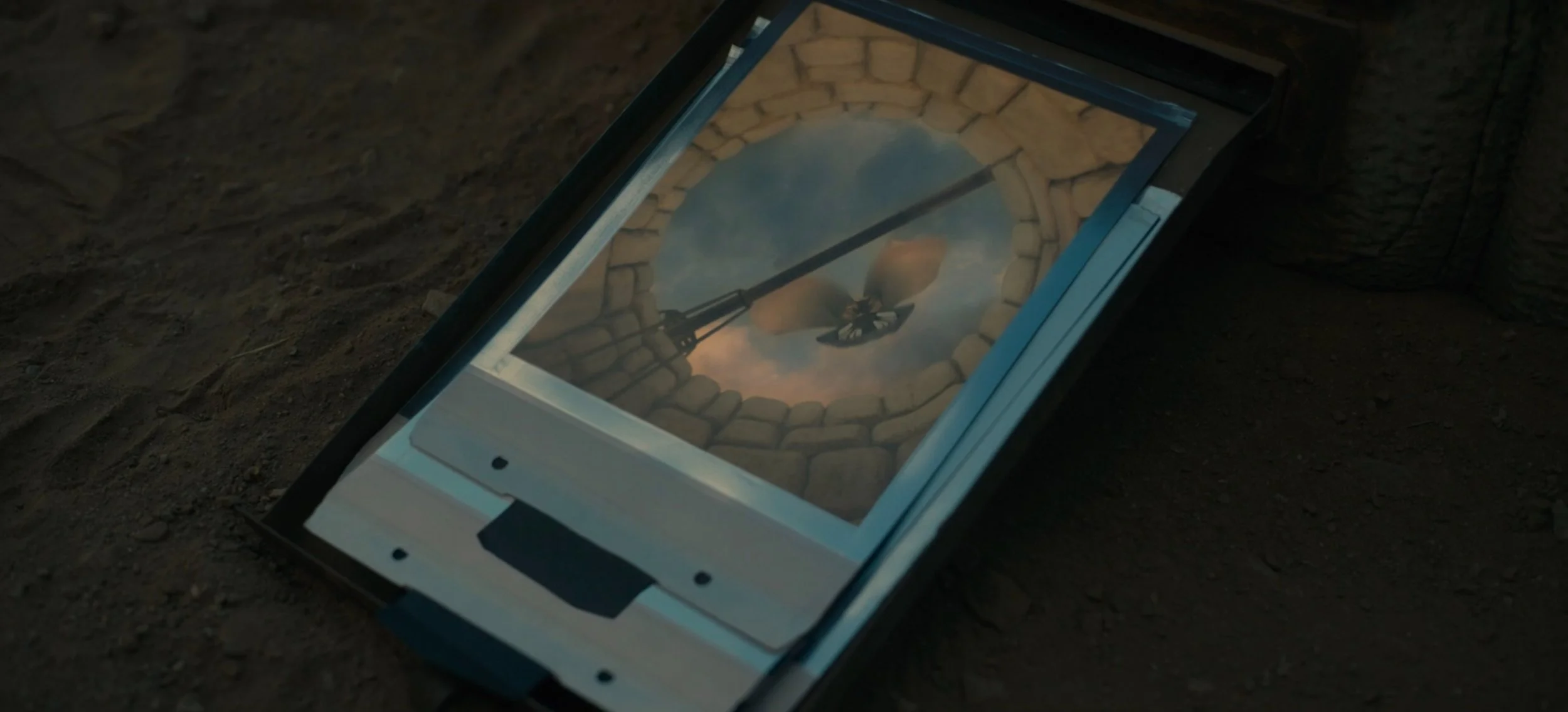
The Shot. Proof of what OJ and Emerald went through.
the need to be witnessed
Given these circumstances, a photo – one measly photograph – is all the difference in the world. How could you not do everything you could to document what you’ve been through?
“How could you not do everything you could to document what you’ve been through?”
Many of us have been through experiences that were so hard that they can feel unbelievable. It can leave you with a sense of “Did that actually happen?” Or “I can’t believe I survived that.” Healing from these hardships is so important because it helps us move forward and not feel like they keep happening to us, even though they are in the past.
But healing from trauma is parallel to being witnessed. They don’t share the same end-goal.
It is absolutely true that my clients don’t need to talk through their upsetting experiences if they don’t want to. We can do meaningful, effective work, helping the nervous system release what it’s holding – all without ever needing to tell the story with words. Lots of people prefer this route: they don’t want to relive what they’ve been through, they just want it to be over.
why we want to be believed
But for others, that’s not enough. Telling me the story and having me sit in the understanding and weight of it – that’s a big part of what they’re after as part of the healing process. Having another person who wasn’t there be a witness to its impact, it helps us feel less alone in what we’ve been through.
Were someone like OJ, Emerald, or Angel to walk through my door, part of my job would be to offer them that validation of yes, it really is an unbelievable thing you went through: and I believe you that it happened.
What is this need to be believed about? In OJ and Emerald’s situation, they survived a fantastical, unusual story that will certainly draw doubt from people who didn’t live through it. Many people go through less obscure experiences and people simply don’t believe them. I’m reminded of the story of a woman who was kidnapped, and the police assumed it was a hoax without investigating because she wasn’t hysterical enough when she found her way home. This pattern of disbelief exists in less extraordinary situations as well. For instance, women and children are often not believed when they are survivors of violence. Perhaps it’s hard for our minds to process such terrible things, I’m not sure.
But I do know that our culture has a tendency to demand evidence to support our feelings. I see it every day as a therapist. It’s like we have to mount a defense for why a feeling has come upon us, rather than people just accepting the feeling is there, period.
When we’re taught over and over again that we have to justify how we feel, it makes sense that we have a need to be believed about the series of events that led to the feeling. OJ and Emerald walking away from their encounter with a photo is a physical token of what they went through: perhaps the photo will shelter them from people challenging their healing process. And perhaps having someone listen to us, without judgment, offers the same.
Thank you for reading! I’m Trina, and I’m a therapist in Austin, Texas. I write about movies, TV shows, & other media that reflect the kinds of patterns, relationships, and questions my clients are exploring in therapy.
I wrote this post myself, drawing on my own ideas and clinical perspective. I occasionally use AI to help me with things like titles, keywords, and SEO. But the reflections are always mine.
If you’re in Texas and looking for therapy, I’d love to connect and hear more about your story.