am i overthinking this decision?
A quick heads up: I write reflections about films and other media through the lens of relationships and mental health, so spoilers are part of the territory. This post has a brief mention of interpersonal violence, take care.

I’ve always been a spontaneous decision-maker, for better or worse. Many of my most impactful decisions have been very on-the-spot or the work-of-a-moment, so for a long time I had trouble connecting with why making a decision was so hard for some people. But then the stress of living through a global pandemic rolled around, and making decisions became fraught for me for the first time.
Every choice seemed suddenly to have gained in importance and solemnity – everything from what to make for dinner to where to live carried a new, almost unbearable weight, and overthinking each decision was basically a foregone conclusion. I finally understood why making a decision can feel so hard for people, to the point of being frozen into inaction. It’s one of the more common reasons people end up going to therapy, so at this point, I’ve heard dozens of people share just how burdensome decision-making feels for them.
The film I’m discussing today – The Green Knight (2021) – made me think a lot about decisions and their impact, as well as the mental and emotional energy we expend as we make them. The Green Knight is a re-telling of part of the Arthurian legend, with this adaptation focusing on Gawain, King Arthur’s nephew. Early in the film, Gawain attempts to slay the Green Knight, and because the Green Knight survives, Gawain must face the knight again in a year’s time in the Green Chapel where the knight lives. The film follows Gawain and the many challenges he faces in his quest.
In this post, I’ll be discussing the film, but I’ll also be sharing some thoughts on an interview with the film’s director, David Lowery. This interview stuck with me because Lowery answered several questions about why he made certain choices in the making of the film, and many of his answers surprised me. It gave me the impression that the final product was not the result of an orchestration that held every decision as precious.
is all that deliberation worth it?
The decision that stood out to me the most was regarding the color palette. At one point in the interview Lowery discusses how the color green wasn’t showing up well when filmed; it was coming out neon, like Slimer in Ghostbusters. A film called The Green Knight – and green isn’t working. I can’t imagine how disappointing and frustrating it must have been.
Instead of steadfastly committing to the color green, however, the cinematographer expanded the palette into interesting, symbolic directions. It makes me curious what would have happened if Lowery had made the choice to continue forward with green as the central color. How much time would the filmmakers have wasted problem-solving? How much of the film would have been an entirely different piece of art? Would we have felt the difference, watching from the audience? Or would the film have had the same impact, but with invisible baggage hidden within every scene?
The unexpected disconnect between a decision’s import versus the degree of fretting preceding it and the resulting outcome was echoed in the film itself in Gawain’s choices. Gawain’s handling of the loss of his green girdle (or belt) is a great example of one of these potentially critical moments. Early in Gawain’s quest, he is beaten and robbed by thieves who tie him up and leave him for dead. One of the thieves steals the green girdle that Gawain’s mother – Morgan le Fay, the powerful witch of legend – made for him. The belt had the power to protect Gawain from harm, and it was lost to him basically in the first act of his adventure.
Gawain is not naive to the fact that the fate awaiting him at the Green Chapel is almost certain death, so an entire story framed around the retaking of his life-saving girdle would not be inappropriate. If ever there were a great opportunity to brood over your next move, this moment seems like the right one. But at this point in the story, the girdle’s loss is basically a footnote, and Gawain moves on without expending any additional energy on this loss.
Another decision that stood out to me in his journey was when Gawain finds himself at what looks to be an abandoned cottage, so he stops to stay the night. He finds, however, that the cottage belongs to St. Winifred who was beheaded by a spurned lover, her head thrown into a nearby lake. She cannot rest without her head reunited with her body, so she entreats Gawain to retrieve it for her. He asks what she will give him in return, and the answer is – nothing.

Gawain contemplates a request from St. Winifred
He decides to complete the task for her anyway. He dives into an unfamiliar body of water in the middle of the night to help a ghost find peace – it’s an unforgettable part of the film and therefore an important part of Gawain’s story.
Important – yes. Impactful – unknown. Did this particular choice change the course of Gawain’s journey? Probably not. Did Gawain himself change? Perhaps.
This incident in particular sat with me as I pondered the impact of our decisions. For some of us, it feels logical to spend more energy being careful about decisions that are likely to have long-term impact. But how do you define long-term impact? What is impactful? And how much care is the right amount? Retrieving the head of St. Winifred seems to have no bearing on the events that follow within Gawain’s quest. But then again, The Green Knight is the story of a quest in its truest sense: it’s more about who Gawain becomes than a strict cause/effect storyline.
The culmination of this film – the scene in which Gawain reaches the Green Knight and decides his own fate – has as much to do with Gawain’s character development, forged through trial after trial on the road to the Green Chapel, as it does with the choices he makes when he arrives.
the anxiety of needing to get it right
I mentioned earlier that in my experience, one of the more common reasons people seek out therapy is because making decisions is hard and anxiety-provoking. Part of the struggle is the anxiety about making the right choice – the feeling that there’s one correct answer waiting to be discerned. When the stakes feel high, it can seem like an inordinate amount of wheel-spinning to find that one, right choice is somehow justified.
But in both Gawain’s story and in David Lowery’s interview, the rightness of a choice felt undermined for me, like energy expenditure weighing the options may be outsized even for incredibly important decisions. And that’s how I feel about real life, too. If you’re a client of mine, you’ve almost certainly heard me make a comment about how the reason that making decisions is so difficult is that we’re often choosing between two or more right options. I may need to amend my phrasing in that what I actually think is that the options themselves are often neutral or their relative rightness or wrongness may not correlate with their later impact. Regardless of my phrasing, I think the implication is the same: rumination in service of our choices is an activity that’s not entirely connected to outcome.
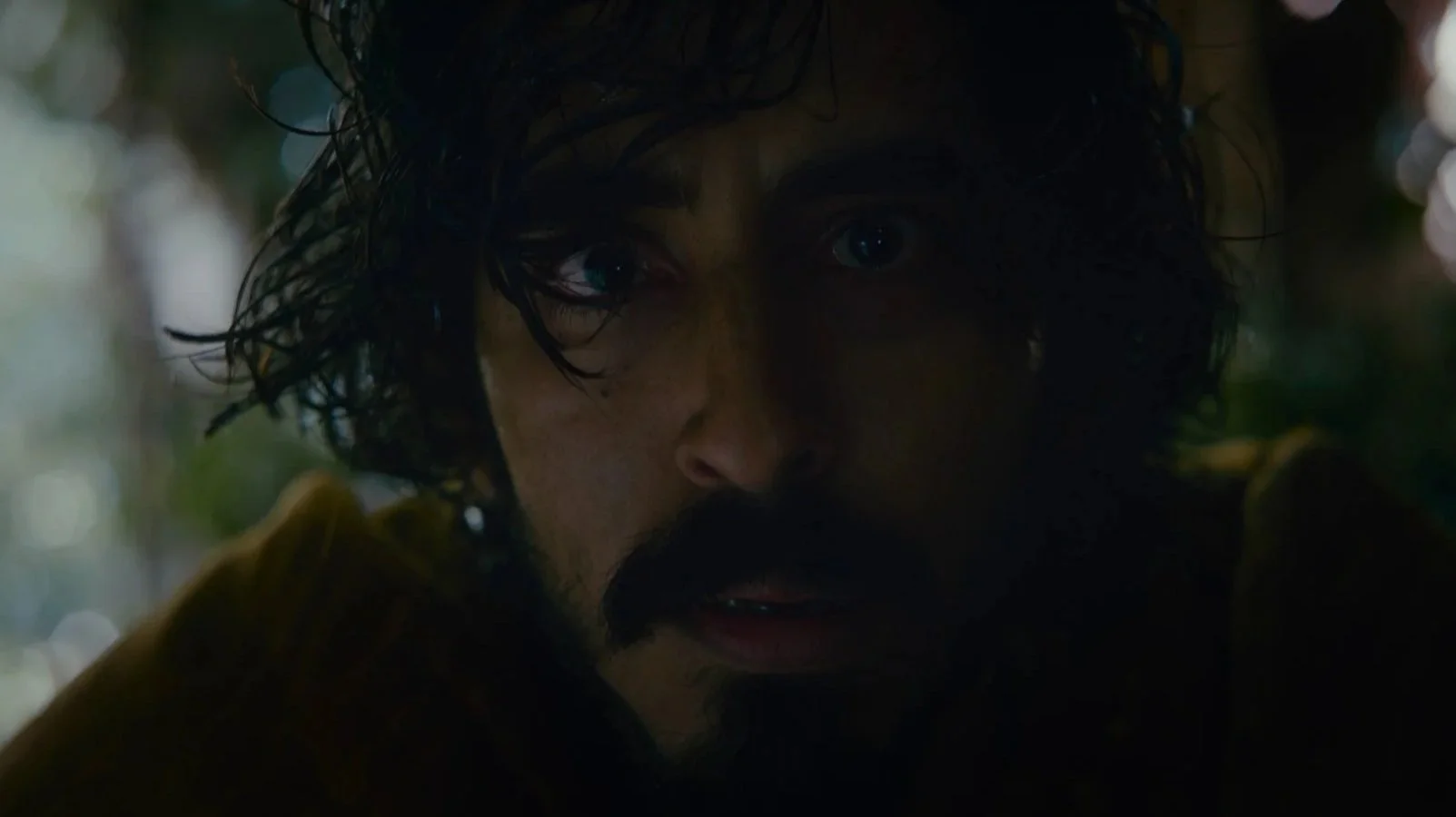
Gawain as he makes his final decision of the film
What does it mean that our agony over discerning the right choice may not have earned the right to torment us because the larger story may supersede our choices, regardless of how big the stakes feel in the moment? I can’t help but think that we spend so much energy weighing our decisions when ultimately there’s a bigger picture at play. A bigger picture that dilutes the narrative impact of each individual choice, even when they feel hugely important when we’re in the midst of making them. For me, the thought of relinquishing my need to control the outcome feels freeing, but we may not all land in the same place. What do you think?
sitting with not knowing
You’ve gotten this far reading this reflection about decision-making and its challenges. Maybe you’re waiting for me to use my therapist voice to share the clear and simple advice that will clear things up for you. Unfortunately, I don’t have any shortcuts to offer. A lot of the work I do with my clients is actually just sitting with how uncomfortable it is that there may not be a right answer. That the amount of time you spend making pros/cons lists and trying to predict the future based on each option isn’t going to make the unknown known. The truth is, overthinking our choices is a way that we try to convince ourselves we have control that we don’t, and it’s uncomfortable to think that sometimes we just have to halt the mental rehearsals and choose – just like David Lowery and just like Gawain.
Thank you for reading! I’m Trina, and I’m a therapist in Austin, Texas. I write about movies, TV shows, & other media that reflect the kinds of patterns, relationships, and questions my clients are exploring in therapy.
I wrote this post myself, drawing on my own ideas and clinical perspective. I occasionally use AI to help me with things like titles, keywords, and SEO. But the reflections are always mine.
If you’re in Texas and looking for therapy, I’d love to connect and hear more about your story.